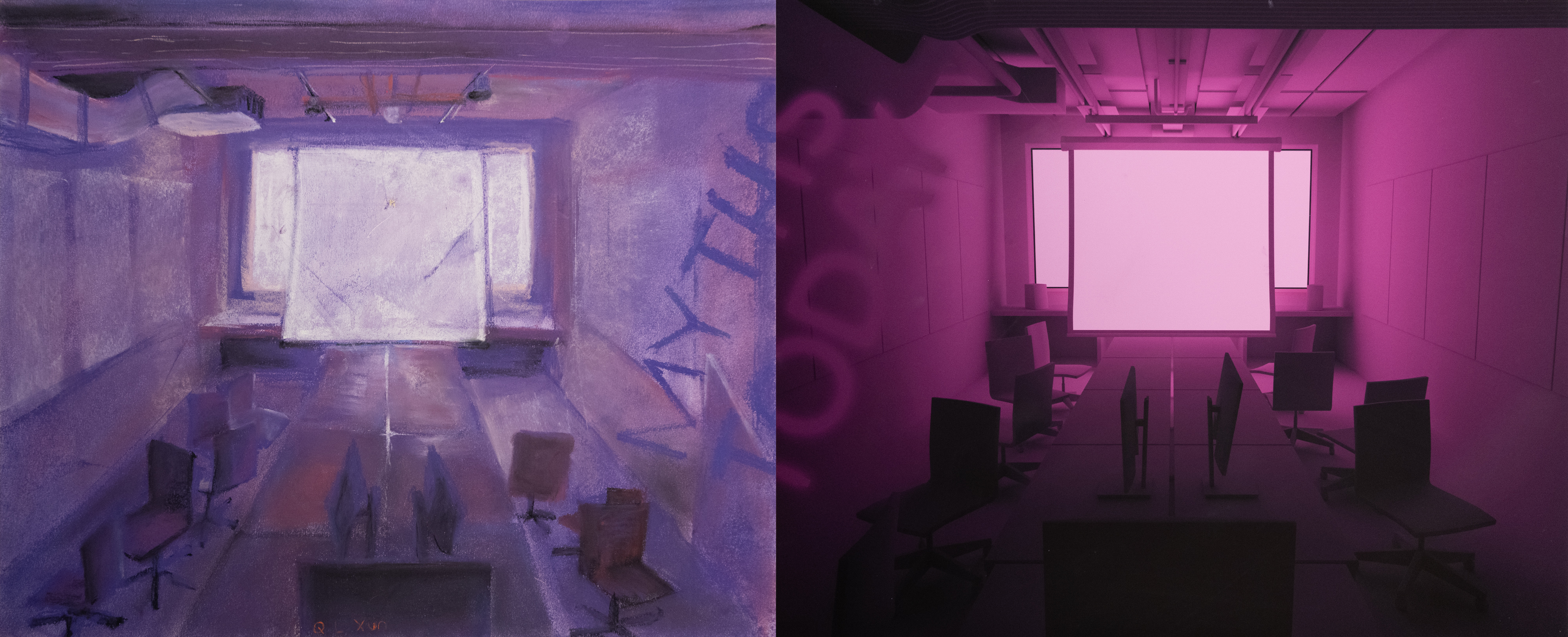
Materials:
NuPastel on dry medium drawing paper, Blender, iPhone 11 camera, & Snap Pro app
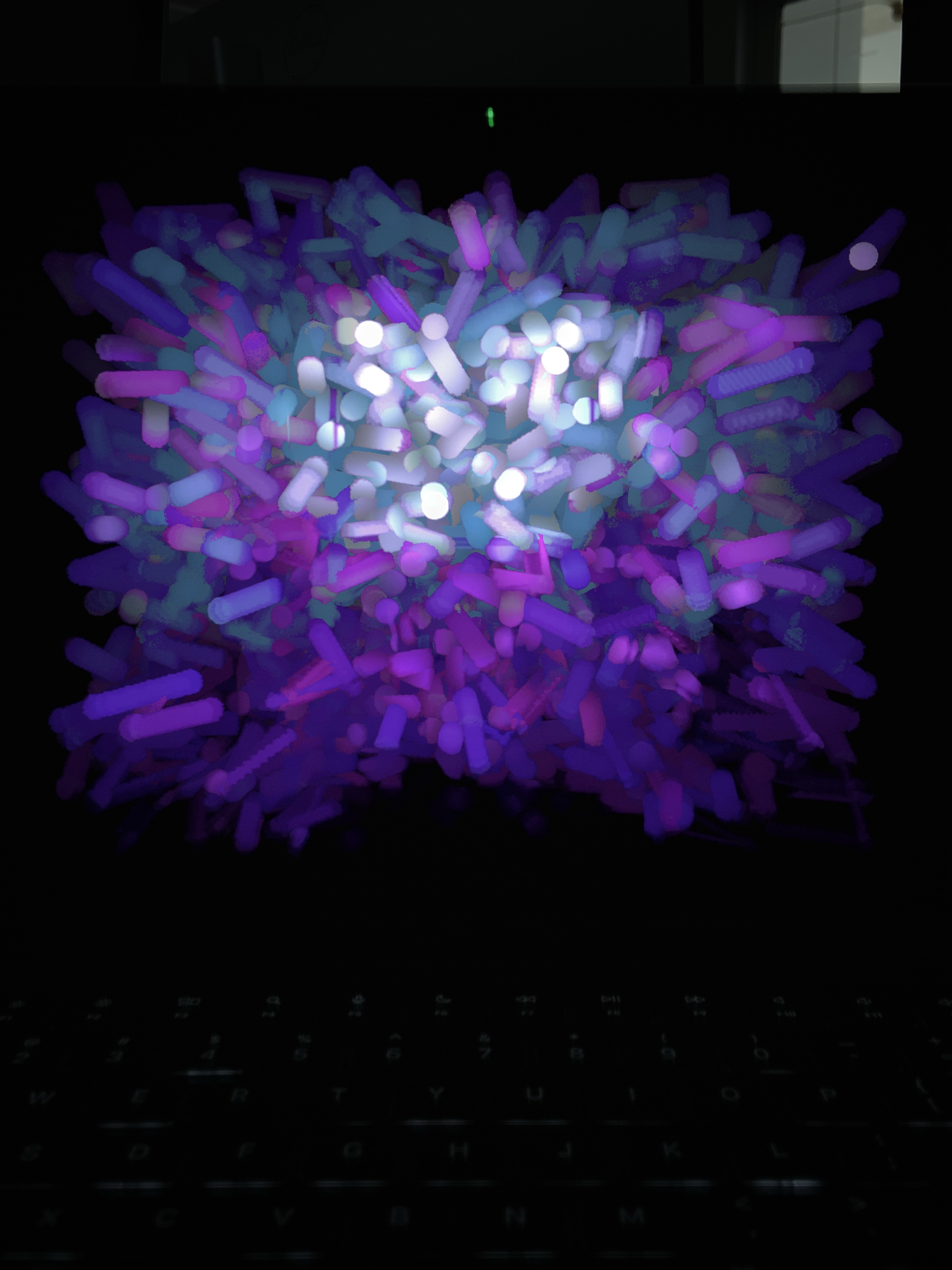
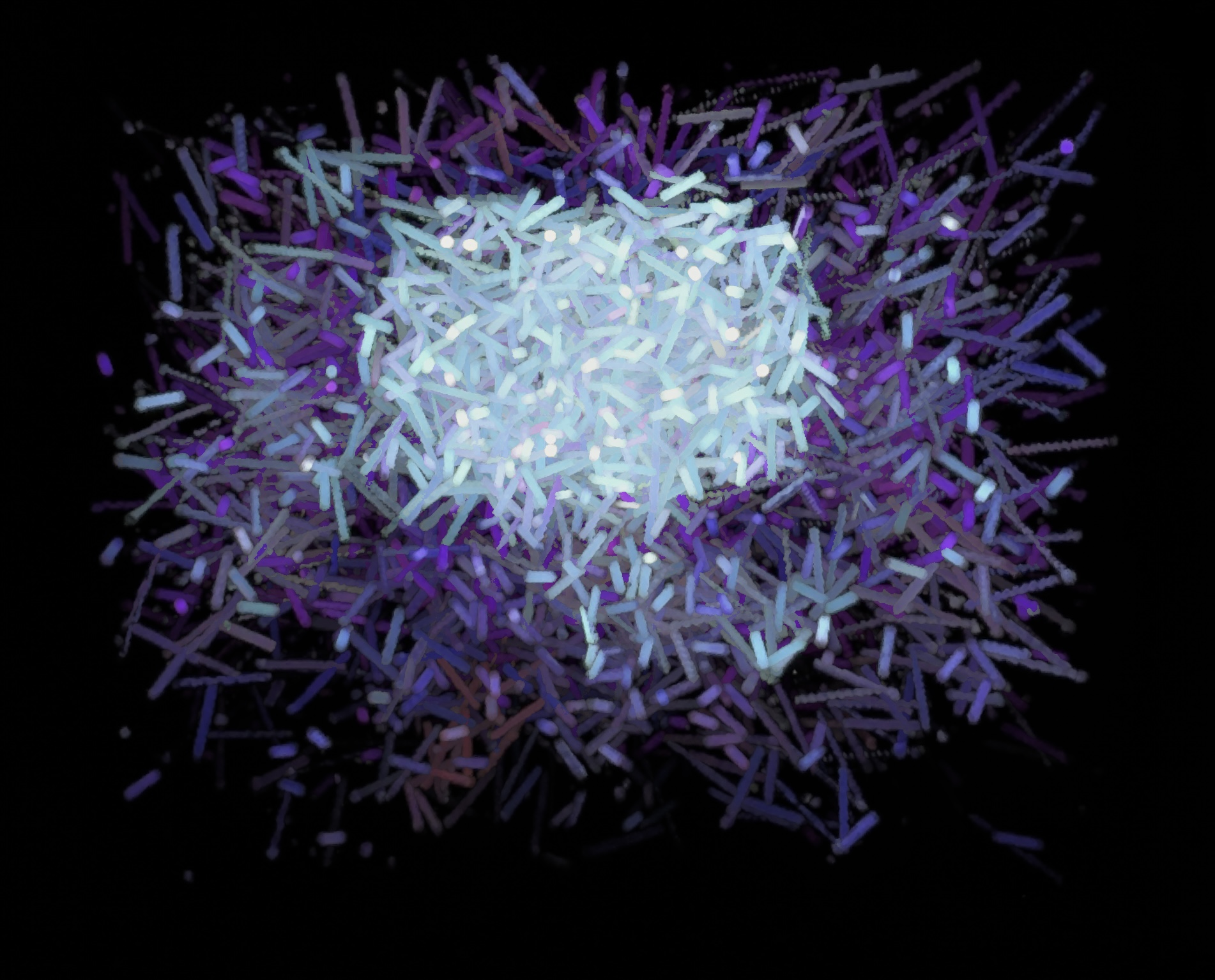
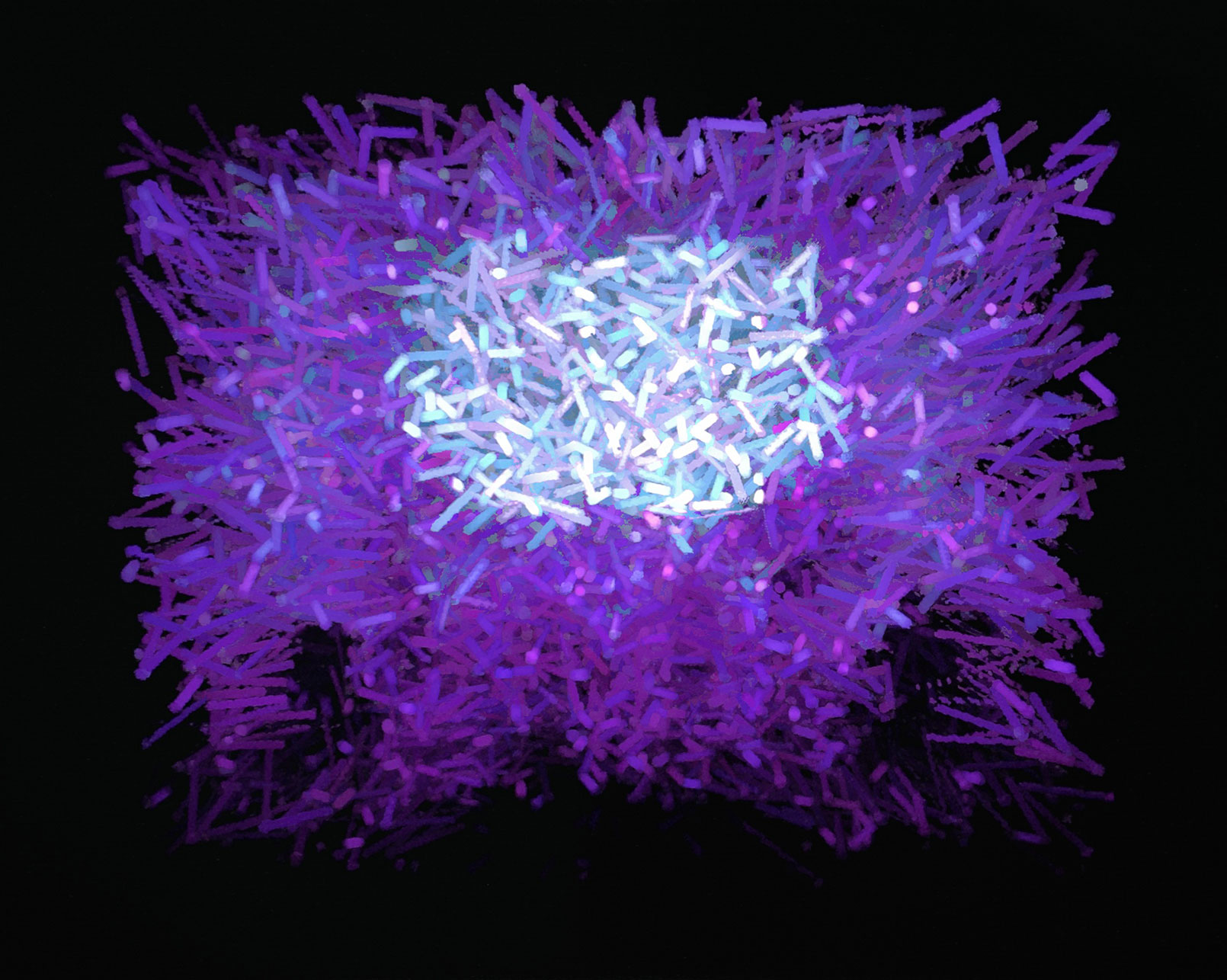
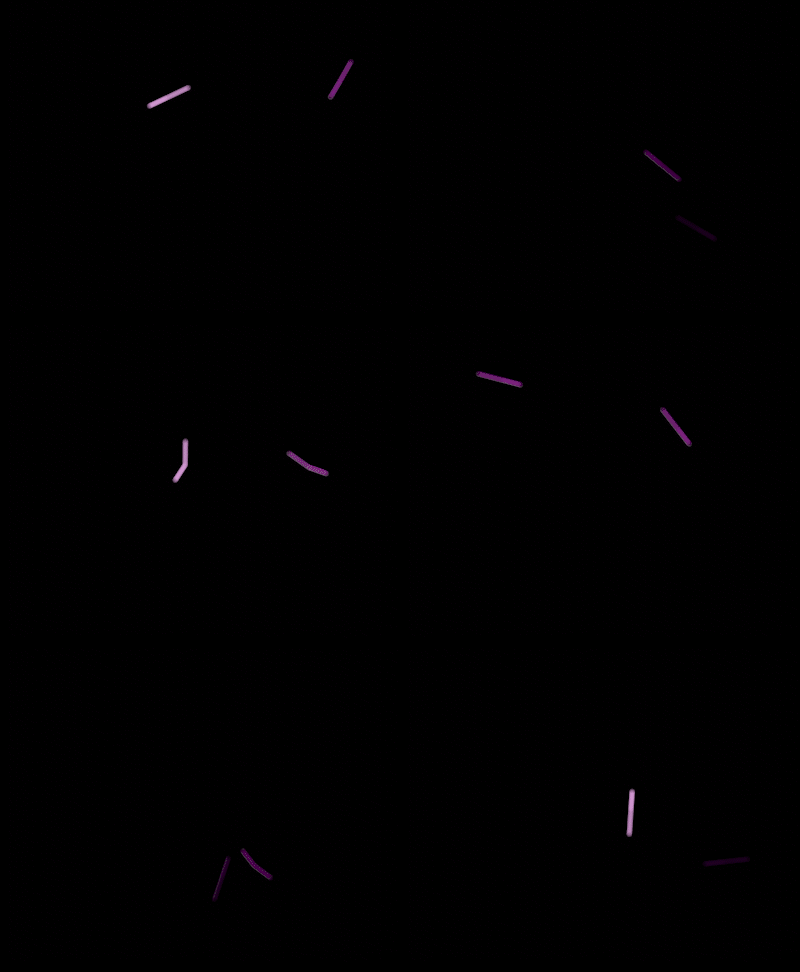
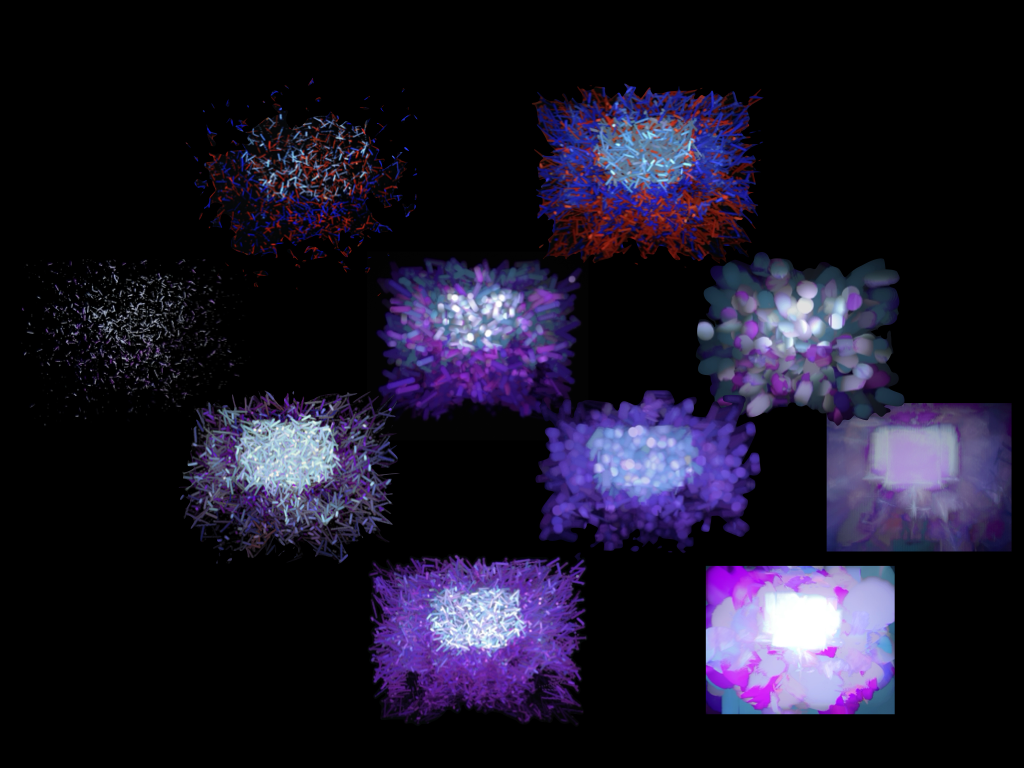
Formally, this work is composed of two orginal images, fed into a custom procedual system built in Blender that reinterprets them with two fast moving spheres. The pathes of the spheres are then recorded with a camera by taking a long exposure photo. The result is a series of "translations" from a real space to a drawing, a digital 3D space, a pair of speeding spheres, and then a distorted vision of the original image. I also played with the properties of sphere pair. By changing their sizes, content, and speed, many different final results were produced, as seen in the gallary of images below.
Conceptually, this work documents the struggles I experienced during my first quarter at DESMA and questions many ideas I came into contact with as a media artist. The title, presented in the format of a Wittgensteinian list, presents the topics in terms of their level of detail: 1 being topic 1; 1.1 is the explanation for 1; 1.11 is the explanation for 1.1; and so on. This "translation" process mirrors but also records the kind of abstraction I witnessed in the works and theories of DESMA students and faculties: conceptually rich and obscure; formally and aesthetically out of touch.
*this work can also be fittingly described as such: conceptually rich and obscure; formally and aesthetically out of touch.
The sentiment captured by this work may be textually expressed by a blog post I wrote a year after its completion:
"The idea of Futurism is in many ways an unconsidered movement that resulted in an ideology that really does not present a strong generative narrative. In this way, Futurism can be seen as largely reactionary, and critical in its context of industrialization and social alienation. Its most valuable theoretical aspect is its critique of the disjunction between the reality of the time and the culture produced by the people. However, after this critique, even though it attempts to discuss some generative concepts such as the ideals presented in the manifesto, noise-art, and tactilism, Futurism fails to present their dream in good faith. This is primarily exemplified by the radical tone of voice that the manifesto takes on; for example Marinetti states “Admiring an old picture is the same as pouring our sensibility into a funerary urn instead of hurling it far off, in violent spasms of action and creation”. Similarly, the use of emotional declarations and rhetorical questions are all demonstrative of the uncompromising extremism that the movement Futurism has taken on. This leaves little space for real pragmatic discussions of cultural production, and instead falls into a condition of negativity that can only be seen as reactionary.
Furthermore, I argue that the specific musical branch of futurism, known as noise-art, is even more problematic, insomuch as it spotlights the limitations of cross-disciplinary cultural production, especially in contrast to contemporaneous musical figures such as Arnold Schoenberg. Russolo’s text is based on analytical and ideological ends, taking on the Futurist project of aestheticizing industrial elements. However, the analytical nature of this “music” also precisely makes it inhumane, which is the most dramatic difference between noise-art and Schoenberg’s atonal music. Schoenberg comes from music and returns to music insomuch as his music, although occasionally unpleasant to the ear, is full of sentimentality and expression. His twelve-tone technique is simply a means to an end; but the end remains raw expression out of passion. Multi-disciplinary cultural producers so oft lack the passion for their art. This key difference perhaps also reveals the whole flaw of Futurism, and by extension media art as a cross-disciplinary field: Analysis makes creation passionless. From reading the text of Russolo and listening to his music in comparison to Schoenberg, one can tell that Russolo did not love music but Schoenberg did."